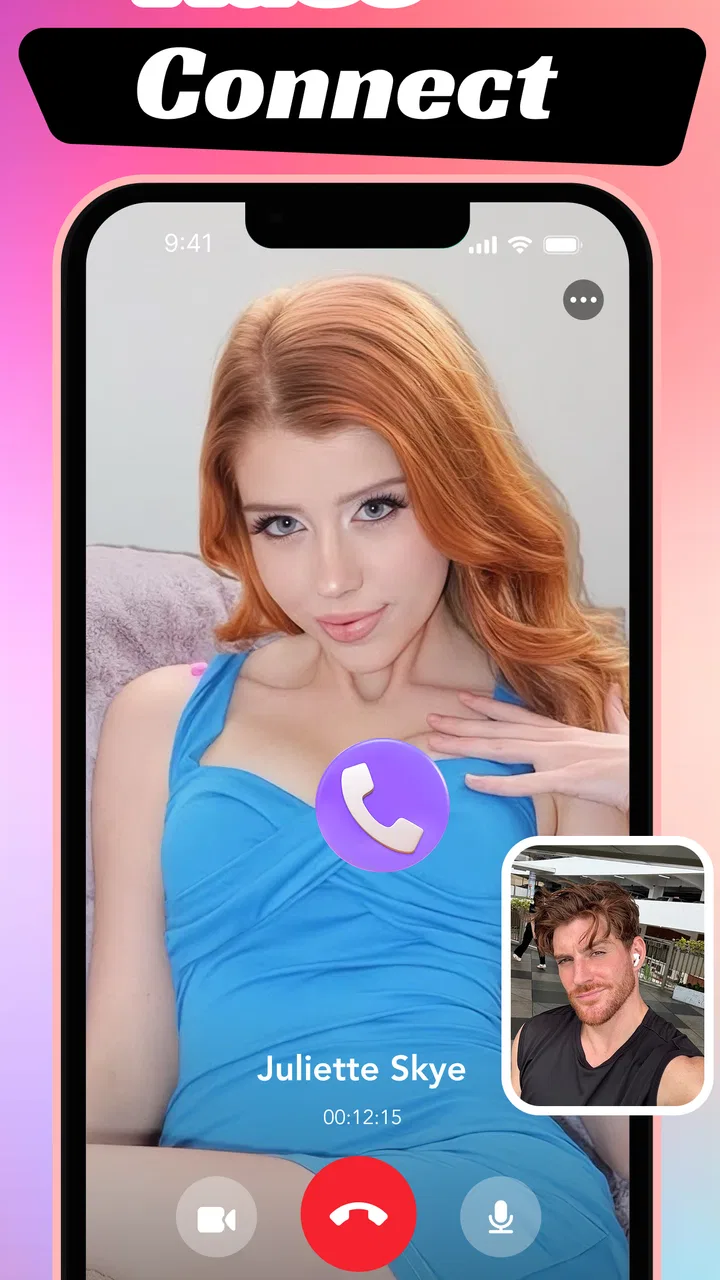
Uinto - Live Chat & Connect
- 0.0
- Rating
- 10.00K
- Installs
- Free
- Price

 Analysis by App-foxy
I approached Uinto - Live Chat & Connect as a lifestyle app for people who want a simple way to paint, turn creative work into video, and share the result. That combination gives it a more specific purpose than a general social network: the focus is not only on talking, but also on showing something you have made. In my experience, that makes the app easiest to judge by your creative routine rather than by the number of social tools you expect.
The first thing I would ask a friend is simple: do you want a lightweight place to create and connect, or are you looking for a full drawing studio, a dedicated video editor, or a large messaging community? Uinto sits between those categories. Its appeal comes from bringing painting, video, and sharing into one experience, while its limitation is that a focused alternative may still be deeper for any one of those jobs.
How I Would Decide Whether Uinto Fits
I would begin with the intended habit. If you like making visual posts and then discussing them with other people, the app has a clear reason to exist. It can suit a casual illustrator, someone who enjoys experimenting with visual ideas, or a user who wants creative activity to be part of a social routine. It is also a reasonable option for people who prefer trying a free app before committing to a more specialized creative subscription.
You May Also Like

 AccuWeather: Weather Radar
AccuWeather Review: A Quick, Clear Forecast for Everyday Decisions
For everyday plans, the best forecast is the one you can understand quickly. AccuWeather makes rain timing, radar, and local conditions easy to act on, with a few trade-offs.

 Hill Climb Racing
Why Hill Climb Racing Still Turns Crashes Into One More Run
A tiny car, a bumpy hill and one more upgrade: Hill Climb Racing keeps resurfacing because its simple chaos makes every near-miss feel personal.

 AliExpress - Shopping App
AliExpress Makes Global Shopping Feel Personal, but Shoppers Bear the Risk
AliExpress turns a global marketplace into a pocket-sized discovery engine. Its reach is useful, its shopping loop compelling, and its trade-offs easy to miss.

 Lords Mobile: Kingdom Wars
Lords Mobile Is a Kingdom-Building Routine, Not a Quick Match
A case-by-case verdict on the building, battles, device demands, and social commitments that make Lords Mobile rewarding for some players and exhausting for others.

 PDF Scanner app - TapScanner
TapScanner Makes Paperwork Easier to Capture, Check, and Share
TapScanner makes scanning with a phone feel less like a rescue operation and more like a dependable step in getting work done. Its capture tools are useful, though not flawless.

 Block Blast!
 Shows How Much a Puzzle Game Can Leave Out
A quiet grid game shows why puzzle players increasingly value instant clarity, repeatable skill and low-pressure play—and where the genre still needs to catch up.
More From Our News Desk
View All News


Uinto is listed as a free lifestyle app, developed by Hamza Munirr, with a Teen content rating. It runs on Android devices using version 7.0 or later, so its basic platform reach is broad. The current release is 1.0.6, and the app has passed around ten thousand installs. Those details suggest a product that is still relatively early in its public life, which matters when deciding whether you value a fresh, focused experience more than the polish of a long-established service.
I would also separate the question of access from the question of long-term cost. You can start without paying, but optional in-app purchases range from ninety-nine cents to ninety-nine dollars and ninety-nine cents per item. That is a wide span, so I would treat the free entry as a chance to inspect the workflow rather than assuming every useful capability will remain free. Before investing time in a large personal collection, I would check what each optional purchase changes and whether it affects the part of the app I actually use.
There is another practical decision criterion: how much control do you need over the finished work? A person who wants advanced layers, precise brushes, detailed timeline editing, or professional export choices may feel more comfortable with dedicated tools. Someone who mainly wants to make something attractive, share it, and continue chatting may prefer fewer separate apps. Uinto makes more sense when convenience matters as much as technical depth.
The creative loop is the strongest reason to try it
The most interesting part of Uinto is the relationship between making and sharing. In a typical workflow, I might create a small painting, turn the process or result into a video, and then use the social side to invite a response. That sequence feels more natural than completing a drawing in one app, editing it somewhere else, and finally moving it to a separate community.
That does not automatically make the result better than a specialist tool. It does make the path shorter. For a quick evening project, a visual greeting, a personal sketch, or a work-in-progress post, reducing the number of handoffs can be valuable. Every export, save, and app switch is a chance to lose momentum, especially when the idea is casual and you do not want to build a formal production workflow.
My main practical insight is to treat Uinto as a creative conversation tool, not as a replacement for every professional app. That mindset produces a better experience. I would use it for small, shareable pieces and social feedback, then move to a specialist editor only when the project demands precision. Expecting it to behave like a complete desktop art suite would create disappointment that the app’s central concept does not require.
Who benefits most from the combined format
Uinto may be especially appealing to beginners who find separate creative applications intimidating. A new user does not necessarily need a long list of controls. They may simply want to draw something, give it movement or video form, and show it to people. Keeping those stages close together can make experimentation feel less like a technical assignment.
It can also work for a person who posts irregularly. If you only create when inspiration appears, a compact creative-social environment may be more useful than maintaining several specialized subscriptions. The app gives that kind of user a reason to return: not just to consume content, but to make a small piece and connect around it.
A realistic everyday scenario would be an evening break after work or school. I could open the app with a rough idea for a simple illustration, spend a short session shaping it, and then prepare a visual clip to share. Instead of waiting until I have enough time for a polished project, I can use the app for a modest creative moment. That is where its lifestyle positioning feels most convincing.
Small workflow choices that make a difference
I would keep early creations deliberately simple. Starting with a compact concept makes it easier to understand how painting, video creation, and sharing relate to one another. It also gives a clearer way to judge the app: after a few small projects, you can tell whether the integrated process feels smooth or whether you keep wishing for controls from another tool.
I would also save a clean version of anything important before experimenting with social presentation. A shareable version and an editable working version serve different purposes. Keeping that distinction in mind prevents a casual post from becoming the only copy of a piece you may want to revise later.
Another useful habit is to create with the final audience in mind. A painting intended for a quick conversation does not need the same preparation as an artwork meant for a portfolio. Uinto’s strongest use case is likely the former: visual work that benefits from immediate interaction. If I were preparing a client presentation or a carefully archived collection, I would use a more controlled workflow alongside it.
Where Uinto Wins, and Where Another Category May Be Better
I would use this section to weigh Uinto’s all-in-one appeal against the trade-offs of keeping creative work in separate, specialist apps. The key question for me is whether bringing painting, video, and sharing together makes me more likely to create and connect, or whether a narrower tool would better suit the way I work.
Its advantage over using several separate apps
The clearest advantage is reduced friction. A traditional setup might involve a drawing app, a video editor, a cloud folder, and a social platform. Each tool may be excellent, but the combined routine can feel heavy for a small idea. Uinto’s value is that the creative and social intentions are connected from the beginning.
This is also useful for people who think in formats rather than finished objects. A drawing may be only the starting point; the video presentation and the conversation around it can be part of the creative result. Uinto acknowledges that relationship instead of treating the artwork as something that must leave the app before anyone can react to it.
There is a less obvious benefit here: the integrated approach can help users discover what kind of creator they are. Someone who begins by painting may find that they enjoy presenting the process more than the final image. Another person may discover that feedback motivates them to finish pieces. A multi-purpose environment encourages that kind of trial without requiring a decision about a professional identity first.
Why a dedicated art app may still be the better choice
If your priority is drawing quality and control, a specialist art application is likely the safer choice. Dedicated tools generally make room for deeper brush systems, more detailed editing, and workflows designed around serious illustration. I would not choose Uinto as my only tool for complex commissions, extensive revisions, or work that depends on precise technical settings.
The trade-off is convenience versus specialization. Uinto can be more inviting when the goal is to create and connect quickly, while a dedicated art app may reward patience with more control. Neither approach is automatically superior. The right choice depends on whether the social destination is part of your creative task or merely an occasional place to publish the finished result.
Why a standalone video editor may suit some creators
The same distinction applies to video. If your main interest is cutting footage, arranging a detailed sequence, refining sound, or building a polished presentation, a dedicated video editor will probably fit better. Uinto’s video role is more attractive when video is a way to present or share creative work rather than a full production discipline.
I would therefore avoid judging it by the standards of a professional editing workstation. For a quick visual post, an integrated route can be enough. For a longer project with many revisions, moving between a specialist editor and a sharing platform may be worth the extra effort.
Why a conventional chat or social network may feel more familiar
Users who mainly want messaging, broad communities, or established social routines may prefer a conventional communication app. Uinto’s identity is tied to creative sharing, so it is less compelling if painting and visual content are not part of your reason for connecting. The app is not the obvious choice for someone who wants a general-purpose inbox first and creative tools second.
That difference is important before switching. If your current service already handles your conversations well, Uinto needs to offer value through making and sharing rather than simply replacing your existing messages. I would use it alongside a general social app if my contacts were not already interested in visual creation.
What switching really costs
The cost of switching is not only money. It is also the time needed to learn a new creative flow, rebuild a sharing habit, and decide where your work should live. Because Uinto combines several activities, the transition may feel worthwhile only if you regularly use at least two of them. If you only want a drawing canvas, or only want chat, adopting the whole environment may add unnecessary steps.
I would begin with a small trial rather than moving everything at once. Make a few uncomplicated pieces, try the video side, and share only work you are comfortable using as a test. Notice whether the sequence feels natural without relying on assumptions about what the app should offer. This approach protects your existing workflow while giving Uinto a fair chance.
Pay attention to optional purchases during that trial. Since individual items can cost anywhere from ninety-nine cents to ninety-nine dollars and ninety-nine cents, I would not buy a higher-priced item simply because it appears to promise a richer experience. First identify the exact limitation you are trying to solve, then decide whether the purchase addresses it. A free starting point is useful, but it should not replace careful spending.
Privacy and audience comfort also belong in the switching decision, especially because the app has a Teen rating and combines creation with connection. I would encourage younger users to involve a parent or trusted adult when deciding what to share and when considering purchases. For any user, the sensible rule is to publish with the same care you would use on another social service: share intentionally, avoid revealing personal details through artwork or captions, and keep private material separate from casual posts.
Questions I would answer before installing
Can a beginner use it? I think the combined concept is naturally approachable for beginners, particularly those who want to experiment rather than master a professional tool immediately. I would still recommend starting with a small project, because the best way to understand the app is to experience the entire path from painting to video to sharing.
Is it suitable for serious artists? It can be part of a serious artist’s social workflow, but I would not assume it replaces a dedicated studio. Artists who need extensive control should keep their primary creation tool and use Uinto only if its sharing process adds something useful.
Do you need to pay to begin? No payment is required to start because the app is free to access. However, optional purchases are available, with individual items spanning from ninety-nine cents to ninety-nine dollars and ninety-nine cents. I would inspect the value of those items in context rather than treating them as necessary by default.
Will it replace a general messaging app? I would not count on that. Its strongest identity is creative connection, so it makes more sense as a place for visual interaction than as a universal communication replacement.
Is it a good fit for older devices? The Android requirement begins at version 7.0, which gives it compatibility with a broad range of devices. Actual comfort will still depend on the phone or tablet you use and on how demanding your projects become, so I would test the workflow on your own device before building a large archive there.
My recommendation after weighing the trade-offs
I recommend Uinto to users who want painting, video presentation, and social sharing to live close together. Its best quality is not that it dominates each category individually; it is that it connects them into one accessible creative loop. If that loop matches how you already think, the app can feel more useful than a collection of technically stronger but disconnected alternatives.
I would skip it as a primary tool if your needs are narrowly professional. A dedicated art app is a better choice for detailed illustration, a dedicated video editor is better for complex timelines, and a conventional social service is better for general communication. Uinto earns its place when the overlap matters.
My final advice is to approach it as a low-risk experiment. Start free, make a few small visual pieces, try the sharing routine, and judge whether the app helps you create more often. Do not buy an optional item until you understand the specific benefit it provides. For the right user, the real value is the shorter distance between an idea, a visual result, and a conversation.
With its Teen rating, free entry, Android support beginning at version 7.0, and a current version of 1.0.6, Uinto is easy to consider without making it your entire creative setup. I see it as a focused lifestyle app for casual creators and visually minded communities. It is worth trying when connection is part of the artwork, but a specialist alternative remains the better decision whenever depth, precision, or broad communication is your main priority.
FAQs for Uinto - Live Chat & Connect
01What is Uinto - Live Chat & Connect used for?
Uinto - Live Chat & Connect is designed for meeting and communicating with other people through live conversations. The app focuses on connecting users for real-time interaction, allowing you to discover profiles, start chats, and potentially build new friendships or social connections. The exact experience can vary depending on the users available in your region and the features enabled on your device.
02Is Uinto - Live Chat & Connect free to download and use?
You can generally download Uinto - Live Chat & Connect without paying an upfront installation fee, but some functions may be limited to free users. Features such as extended messaging, virtual items, profile visibility, or additional connection options could require in-app purchases or a subscription. Before spending money, review the app’s pricing page and the payment terms shown in your Google Play or App Store account.
03Does Uinto - Live Chat & Connect require an account or personal information?
The app may ask you to create an account or sign in before using its communication features. Depending on the registration method, it can request information such as a name, email address, profile photo, age, or location. Only provide details you are comfortable sharing, check the privacy policy, and avoid publishing sensitive information that could identify your home, workplace, finances, or daily routine.
04Is Uinto - Live Chat & Connect safe for meeting strangers online?
As with any live-chat or social-discovery platform, you should communicate carefully because profiles may not always represent people accurately. Do not send money, passwords, verification codes, or intimate content to someone you have just met. Use the app’s blocking and reporting tools when necessary, keep conversations inside the platform initially, and arrange any real-world meeting only in a public place with someone you trust informed.
05What should I check before downloading Uinto - Live Chat & Connect?
Before installing Uinto, check whether your Android or iOS version is supported and confirm that you have enough storage and a reliable internet connection. Read the current permissions, privacy information, age requirements, subscription details, and recent user reviews. Also consider whether you are comfortable with live communication, notifications, and possible interactions with people you do not already know.
Pros
- Quick way to meet people through live chats and social discovery.
- Simple interface makes browsing profiles and conversations easy.
- Supports spontaneous interactions with users beyond your existing contacts.
- Can help shy users start conversations with low-pressure chat features.
- Useful for discovering people with similar interests or social goals.
Cons
- User activity and response quality may vary by location and time.
- Some features or interactions may require in-app purchases or subscriptions.
- Public chat environments can include spam
- fake profiles
- or unwanted messages.
- Sharing personal details with new contacts may create privacy and safety risks.
- Frequent notifications may become distracting unless carefully managed.

Uinto - Live Chat & Connect
Gallery